
A wet floor beside the water heater is a call we hear about constantly, and the first question is always the same: where is it actually coming from? Water travels along pipes and collects wherever the floor dips, so the puddle is often nowhere near the source. It might be the temperature and pressure relief valve or its discharge line, the drain valve near the bottom of the tank, the inlet and outlet fittings on top, condensation on a cold tank, or a nearby pipe that has nothing to do with the heater. It might also be the tank itself, and that answer changes everything. In Toledo, OH, we start every leak call by finding the true source.
Finding the source takes a few careful steps. We clear and dry the area, then watch where new water appears. The relief valve and its discharge pipe get checked first, followed by the drain valve and the inlet and outlet fittings, where dielectric unions and flex connectors tend to corrode. If the heater is gas-fired, we look inside the burner compartment, since water there can be condensation or a sign the tank has given out. When the relief valve is involved, we measure water pressure and check for proper thermal expansion control. Every recommendation is based on what we find.
With the source confirmed, the fix is often simple. A new T&P valve, a brass drain valve in place of a weeping plastic one, fresh dielectric fittings or supply connectors, and an expansion tank or pressure-reducing valve where pressure is to blame can all be handled on the spot. A corroded tank is different. Nothing will reliably seal a rusted tank, so we explain replacement honestly and help you choose the right heater. Before we leave, we can add a drain pan with a drain line and a leak sensor, which matters most for heaters above finished space. Call (419) 208-7043 for leak repair in Toledo.
What homeowners call us about most is Water Heater Repair in Toledo and Water Heater Replacement in Toledo. That's the place to start for most homes.
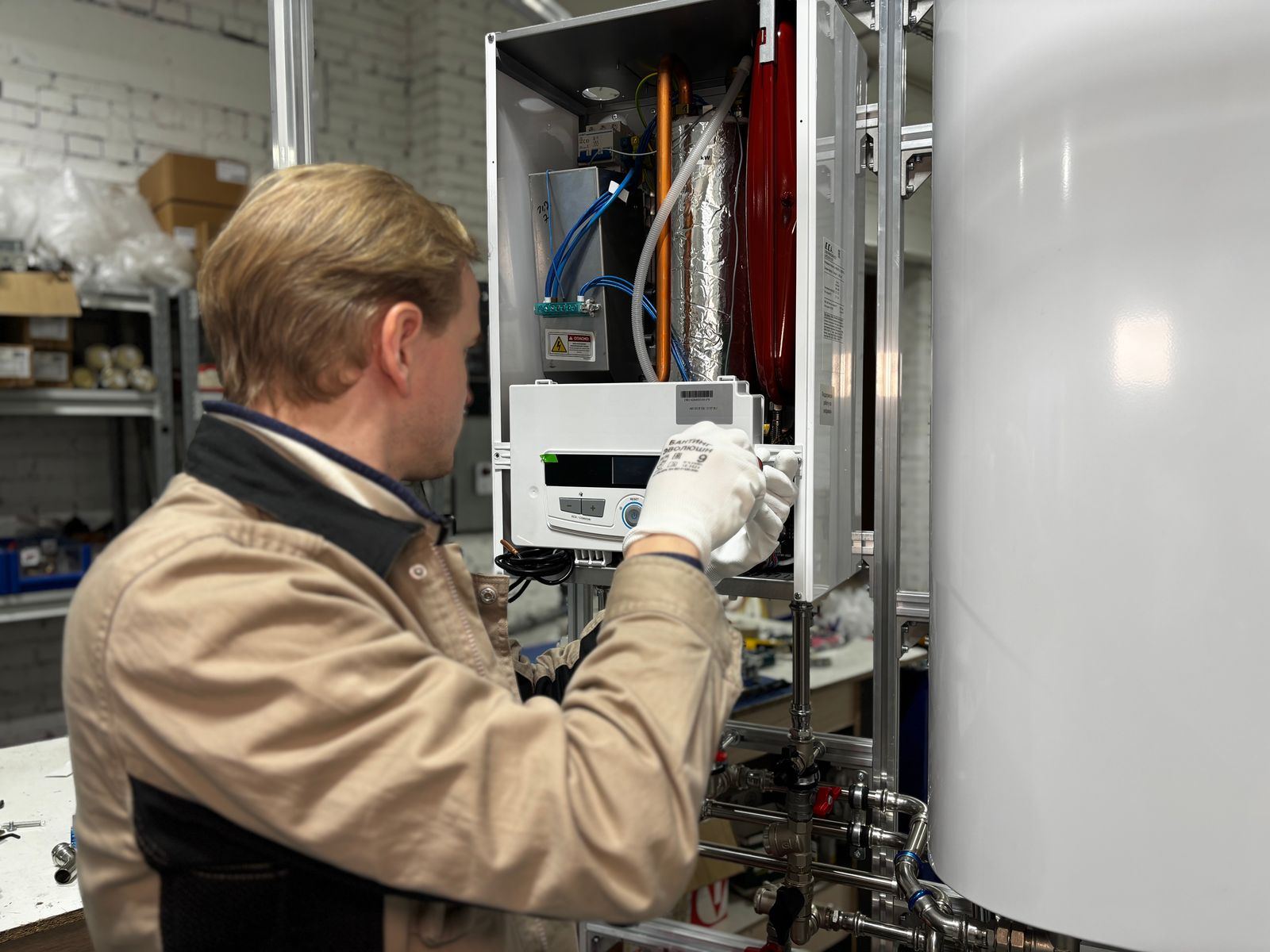
When to Call for Water Heater Leak Repair
Water heaters usually give plenty of warning before they fail, as long as you know what to look and listen for. These are the red flags our technicians see most often before a breakdown:
- Mineral buildup or rust around the hot and cold connections
- Warped baseboards or stained drywall beside the water heater
- Moisture or mineral crust at the end of the relief valve pipe
- A puddle or damp spot on the floor around the base of the tank
- Brown hot water along with moisture around the tank bottom
- Moisture or rust flakes under the burner access cover
- A weeping drain spigot on the lower front of the heater
- The water meter moving when nothing in the house is running
Small Symptoms, Big Consequences
Most water heater failures start small: a popping sound from sediment, a damp spot under the drain valve, or a shower that goes lukewarm a few minutes sooner each week. Don't wait. Get Toledo Water Heater on the phone at (419) 208-7043 and we'll get a technician scheduled.
Common Questions We Hear
Why This Job Calls for a Pro
Most leak mistakes happen before any tool comes out. Water travels along pipes and the outer jacket before it drips, so the puddle rarely marks the source, and harmless condensation on a gas unit or a cold tank can pass for a leak. Guessing leads to replacing the wrong valve or, worse, missing a tank that is about to fail. Safety matters here too: a relief valve that is discharging is protecting the tank, and plugging it is dangerous. Old fittings can snap when forced, and water around a 240-volt electric heater is a real shock hazard.
We work through leaks step by step and fix the cause along with the drip. We dry the unit, let new water reveal the source, test water pressure when the relief valve is involved, and check for expansion issues that cause weeping valves. We replace valves and fittings with quality parts, swap plastic drain valves for brass, and add an expansion tank or pressure-reducing valve when pressure is the root problem. If the tank has failed, we tell you directly and explain replacement options, including the drain pan and leak protection that can keep the next failure from soaking your floors.
Step by Step: How a Visit Works
Good water heater work comes down to a consistent routine, and ours starts with a real diagnosis instead of a guess. Here's a look at each step our team takes:
Isolate the Leak
First the water gets stopped. We confirm the supply valve is closed, the heater is off, and the area is dry enough to work safely.
Trace the Source
We dry the tank and fittings, then check the relief valve and discharge pipe, the drain valve, the top connections, and the burner area one at a time.
Test the Pressure
We gauge household water pressure and look at expansion control, because a closed system without room to expand can force the relief valve open.
Repair, Refill & Verify
We replace the failed part, refill and purge the tank, restart the heater, and confirm every joint stays dry. A leaking tank gets an honest replacement recommendation instead.
Simple Ways to Extend Your Water Heater's Life
Most of the failures we see could have been delayed for years with basic upkeep. Follow these tips from our technicians:
- Add a floor sensor or an automatic shutoff valve that closes the supply when it detects water
- Inspecting the anode rod periodically is one of the best ways to delay a tank leak
- An expansion tank that is present and properly charged keeps the relief valve from opening every cycle
- Make a habit of checking around the heater for moisture or corrosion every few weeks
- Flush the tank once a year so sediment does not overheat the bottom and speed corrosion
- Have household pressure measured, since high pressure wears out relief valves and fittings faster
- Install a drain pan piped to a safe spot, which matters most for attic, closet, and upstairs heaters
Comparing DIY and Professional Work
Relighting a pilot by following the label is one thing. Diagnosing a gas valve, a burned-out element, a dirty flame sensor, or a tankless error code calls for meters and know-how that a pro brings. A side-by-side look:
| Factor | DIY Attempt | Hiring a Pro |
|---|---|---|
| Diagnosis | Guess based on where water collects | Every valve and fitting checked in order |
| T&P Valve | Valve capped to stop the drip, a serious hazard | Pressure and expansion tested, valve replaced properly |
| Old Fittings | Wrapped in tape and hoped for the best | Dielectric unions and connectors rebuilt |
| False Alarms | Normal sweating treated as a leak | False leaks ruled out with testing |
| Water Damage | No pan, no alarm, no plan | Drain pan, drain line, and leak sensor options |
| Result | Source unconfirmed | Leak solved and cause corrected |
Get Water Heater Leak Repair Help Today
Every day a leak or a failing part goes unchecked puts more stress on the tank. Get Toledo Water Heater on the job today.
Get Help: (419) 208-7043Water Heater Leak Repair Across the Toledo Area
We bring water heater leak repair to homes and businesses in town and across the nearby communities. Pick your area to see local details.