Most tankless problems announce themselves the same way, with a blinking code on the display and a shower that turns cold. Behind that code is a system with very little margin for error. There is no storage tank to fall back on, so the heater has to detect flow, light a burner or power its elements, and raise the water temperature by fifty degrees or more in the few seconds it takes water to cross the heat exchanger. When scale narrows the passages, when the flow sensor stops reading, when the flame rod cannot confirm a flame, or when the vent or gas line cannot keep up, the unit protects itself by shutting down. That is the pattern we see again and again in Toledo, OH.
Error codes are a starting point, not a verdict, and we treat them that way on every Toledo call. The same ignition failure code can come from a worn igniter, a fouled flame rod, a gas line too small to feed the burner at full fire, or an air intake clogged with lint. That is why Toledo Water Heater tests before replacing anything. Our technicians read the fault history stored in the control board, watch flow sensor output with a faucet open, measure flame signal and igniter resistance, and put a manometer on the gas inlet to see what pressure actually reaches the valve when the burner is running flat out. We also compare inlet and outlet temperatures against the flow rate, which reveals a scaled heat exchanger long before it fails outright.
Once the cause is confirmed, most repairs are finished in a single visit. We descale heat exchangers with a pump and descaling solution circulated through the service valves, replace worn flow sensors, igniters, flame rods, thermistors, and combustion fans, clean inlet filter screens, and correct venting problems that trip pressure switches. When the real issue is a gas line sized for the old tank heater, we tell you plainly and quote the correct pipe run, because no amount of part swapping will fix a unit that is starved for fuel. If you are fighting a cold-water sandwich, we explain whether it is normal behavior for your model or a sign of a setting, fixture, or recirculation problem we can correct. Call (419) 208-7043 and we will get your hot water flowing again.
Our most requested service is Water Heater Repair in Toledo. Either is a good place to start.
Symptoms That Mean It's Time to Call
Most tanks announce trouble weeks or months ahead with rumbling noises, rusty water, or hot showers that keep getting shorter. If any of the following sound familiar, it's worth having the unit checked:
- Leaks under the unit or around its water connections
- A cold-water sandwich that has gotten noticeably worse
- No hot water at a low-flow faucet even though the shower works fine
- A combustion fan that sounds louder or rougher than normal
- Hot water that fluctuates even though nobody touched the faucet
- Hot water that cannot keep up with more than one fixture
- Repeated ignition attempts, then a shutdown
- A fault code on the front panel and no hot water
Early Action Saves Money
Left alone, even minor symptoms like rumbling or temperatures that swing from hot to warm tend to mean the heater is working its way toward a breakdown. If you notice any of these signs, contact Toledo Water Heater at (419) 208-7043 for a prompt inspection.
Water Heater Trouble? Call Us.
We'll diagnose the problem and give you a straight answer on the fix.
Get Help: (419) 208-7043Your Tankless Water Heater Repair Questions Answered
Why This Job Calls for a Pro
From the outside a tankless heater looks like a plain box; inside, it is a tightly controlled system. One fault code often has several possible causes, and the sensors, igniters, and control boards involved are not cheap to buy on a hunch. Gas models add real hazards: the burner can fire at close to 200,000 BTU per hour, the vent carries combustion gases that contain carbon monoxide, and a loose gas connection or a vent joint that separates can put fuel or exhaust into the living space. Electric models bring a different hazard, often drawing well over 100 amps across several 240-volt circuits, so a loose lug or undersized wire can overheat quickly.
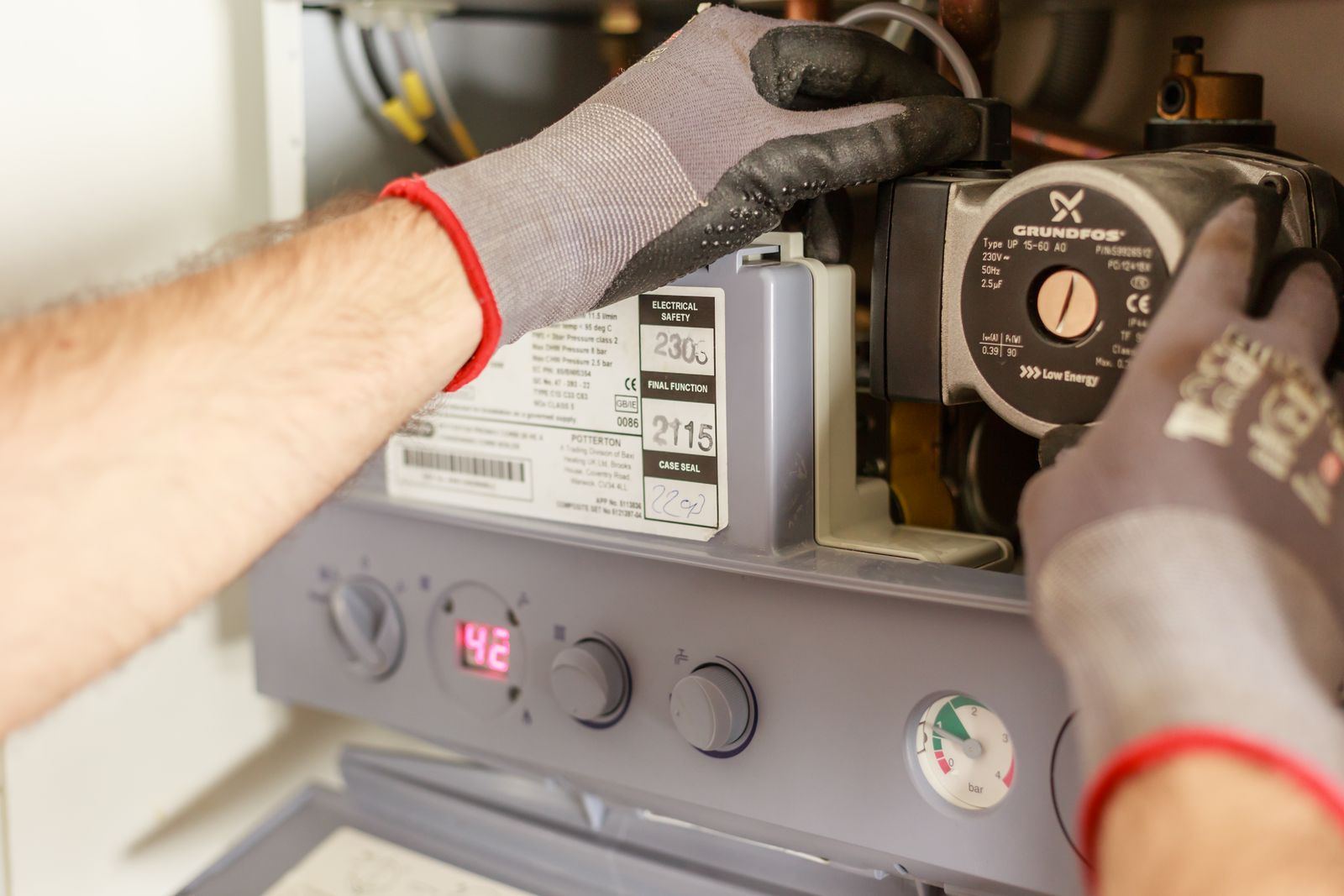
A trained technician with the right instruments gets to the answer faster. Ours read the fault history, measure flame signal and igniter resistance, test flow sensor output, and check gas pressure under full load with a manometer, which is the only reliable way to catch a gas line that holds pressure at idle but sags when the burner ramps up. We descale with a circulating pump and the right solution, then flush thoroughly so nothing corrosive is left in your plumbing. Just as important, you get an honest opinion: if the heat exchanger is damaged on an older unit, you will hear it from us before you spend money on a repair.
How We Handle Tankless Water Heater Repair
Every visit follows a step-by-step method built around testing first and replacing parts only when the readings call for it. Here's a look at each step our team takes:
Read the Unit First
The control board is our first stop. We read the current code and past faults, then confirm the diagnosis with a meter and a manometer on the flow sensor, ignition parts, gas supply, and vent.
What We Found & What It Costs
No surprises. We walk you through the cause and the fix and give you the price up front. If the real problem is an undersized gas line or a worn-out heat exchanger, you will know before anything is spent.
Targeted Repair
Most tankless repairs are finished in one trip: a descaling flush, a new flow sensor, igniter, or flame rod, a cleaned inlet screen, or a corrected vent connection.
Verified Temperature Rise
Before we pack up, we open fixtures at low and high flow, measure the temperature rise, and make sure the burner and vent perform at maximum output.
Questions About Tankless Water Heater Repair?
We give honest advice and upfront pricing on every job, big or small.
Call (419) 208-7043 NowPrevention Tips That Actually Help
Routine maintenance is almost always cheaper and easier than an early replacement. Follow these tips from our technicians:
- Flush scale out of the heat exchanger annually, and sooner in hard water
- Make sure nothing blocks the exhaust vent or the air intake outside
- Check the inlet filter screen periodically, since a clogged one starves the unit of flow
- Tell us before adding a gas appliance, so the gas line can be checked for the extra load
- If scale comes back quickly, add a softener or a scale-prevention cartridge on the cold inlet
- Treat a code that returns after a reset as a symptom worth diagnosing, not ignoring
- Never cut power to an outdoor or garage unit in winter, because it needs electricity to protect itself from freezing
Should You DIY or Call a Pro?
The line between a safe DIY check and a risky repair is usually the moment you need to open a gas fitting, a vent connection, or an electrical cover. Consider the following comparison:
| Factor | DIY Attempt | Hiring a Pro |
|---|---|---|
| Diagnosis | Look up the code and replace a guess | Each suspect part tested with a meter |
| Descaling | No pump or isolation valves | Pump-circulated flush through service valves |
| Gas & Venting | Venting and gas supply problems missed | Combustion, venting, and gas supply checked |
| Board & Wiring | Exposed wiring and sensitive electronics | Power verified off, board handled correctly |
| Replacement Parts | Parts bought before the fault is known | Model-matched parts, often on the truck |
| Outcome | Symptom patched, cause remains | Lasting repair, confirmed by testing |
Get Tankless Water Heater Repair Help Today
Cold showers and damp floors don't get better on their own. Toledo Water Heater can have a technician headed your way soon.
Call (419) 208-7043 NowCommunities We Cover
Our service area reaches well past the city limits. Choose your community for local details.